
 中文
中文

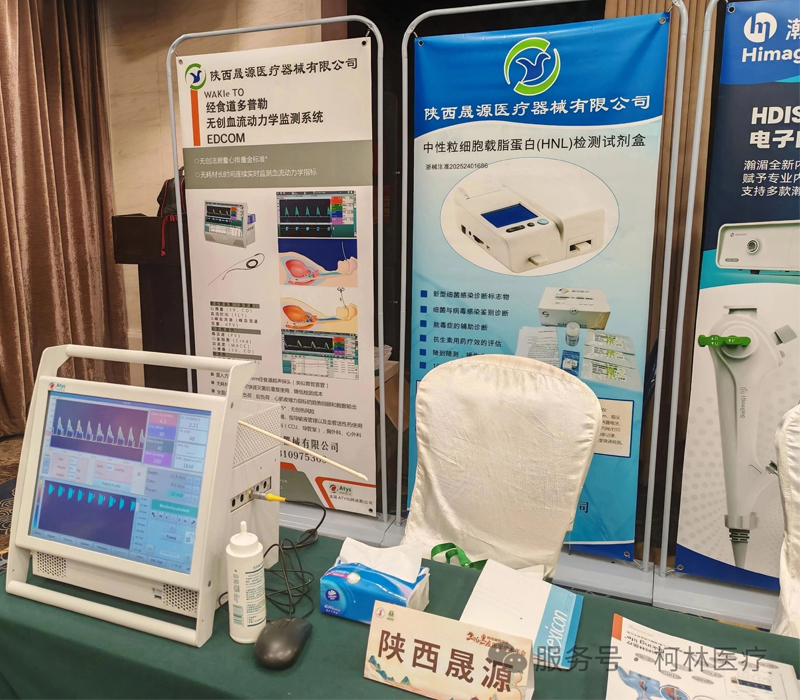
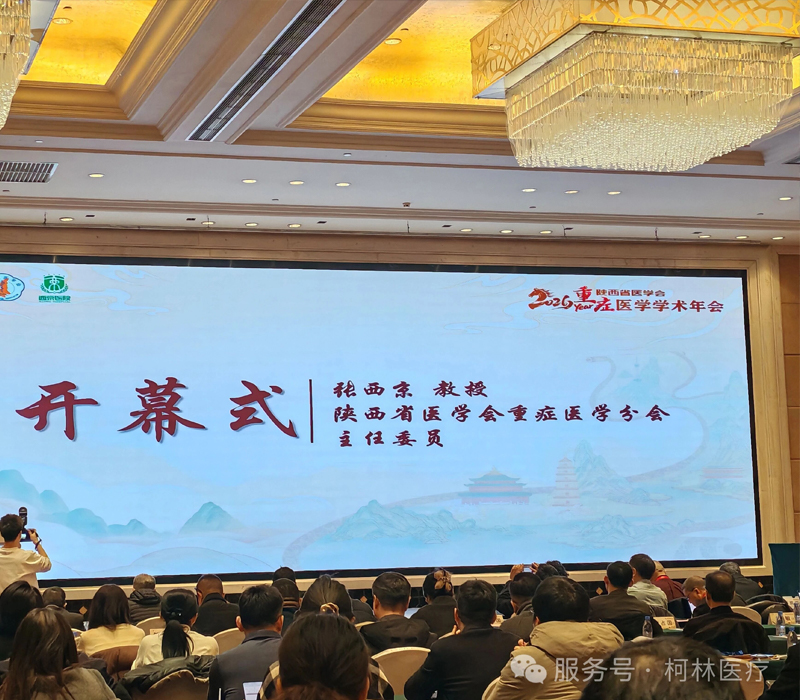
Recently, the 2026 Shaanxi Province Medical Association Critical Care Medicine Academic Annual Conference was successfully held in the ancient city of Xi'an. This conference brought together many well-known experts and scholars in the field of critical care medicine from both inside and outside the province, conducting extensive and in-depth academic exchanges around the latest research advances and clinical practice applications in critical care medicine. Shenzhen Colin Health Medical Co., Ltd. and Shaanxi Shengyuan Medical Device Co., Ltd. jointly participated in the exhibition, focusing on promoting a French-made, imported transesophageal Doppler non-invasive hemodynamic monitoring system, which attracted wide attention from the experts attending. During the conference, the joint booth of Colin Medical and Shaanxi Shengyuan attracted many experts who stopped by for communication. Several authoritative experts in the field of critical care medicine visited the booth in person, showing strong interest in the technical features and clinical applications of this device, and conducted in-depth discussions regarding its clinical applicability and technical advantages.
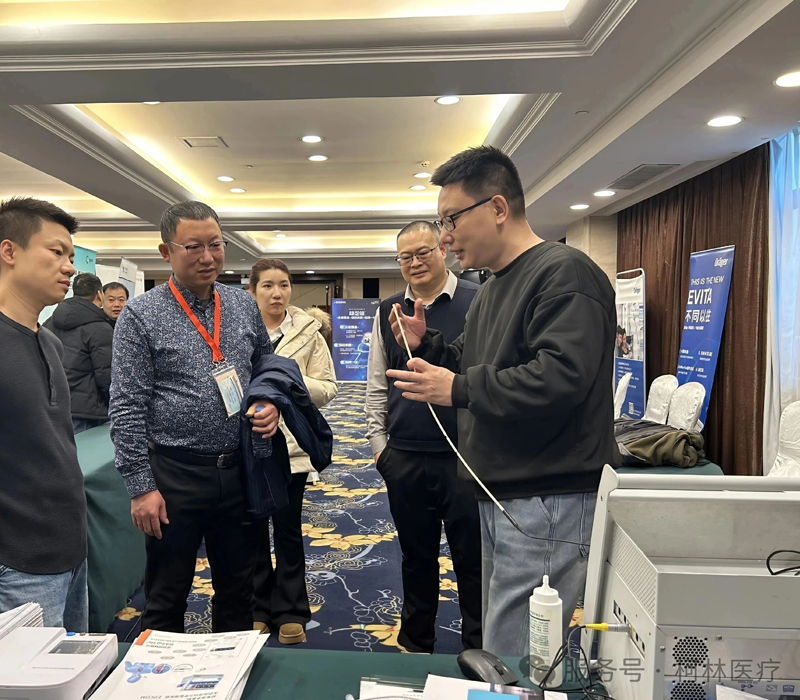
Renowned experts in the field of critical care medicine visited the booth for on-site guidance. They gained in-depth understanding of product performance, engaged in professional academic exchanges, and spoke highly of and fully recognized the technology.
The visiting experts include:
- Professor Zhang Xijing, Director of Critical Care Medicine, Xijing Hospital; Chairman of Critical Care Medicine Branch, Shaanxi Medical Association
- Professor Chen Yongsheng, Director of Critical Care Medicine, Yulin Hospital of the First Affiliated Hospital of Xi'an Jiaotong University
- Professor Shi Haiwang, Director of Critical Care Medicine, Affiliated Hospital of Yan'an University
- Professor Wang Chengli, Director of Critical Care Medicine, Hanzhong 3201 Hospital
- Professor Ma Siqing, Director of Critical Care Medicine, Qinghai Provincial People's Hospital
Experts showed great interest in the continuous, real-time and non-invasive hemodynamic monitoring enabled by transesophageal Doppler technology. They delivered professional comments on its application potential in volume management and cardiac function assessment of critically ill patients. Their valuable insights provide important references for further clinical optimization and localized service of the product.
Product Highlight: New Progress in Non-Invasive Hemodynamic Monitoring Technology
In critical care medicine, accurate and timely hemodynamic monitoring is essential for evaluating patients’ circulatory status and guiding fluid resuscitation as well as vasoactive medication administration. Traditional monitoring methods such as invasive arterial blood pressure monitoring, pulmonary artery catheter (Swan-Ganz catheter) and PICCO can provide key parameters, yet they are limited by complicated operation, high invasiveness and considerable potential complications.
The transesophageal Doppler non-invasive hemodynamic monitoring system launched by Colin Medical represents an important development direction of non-invasive hemodynamic monitoring technology. Its core advantages include:
1.Non-invasive real-time continuous monitoring
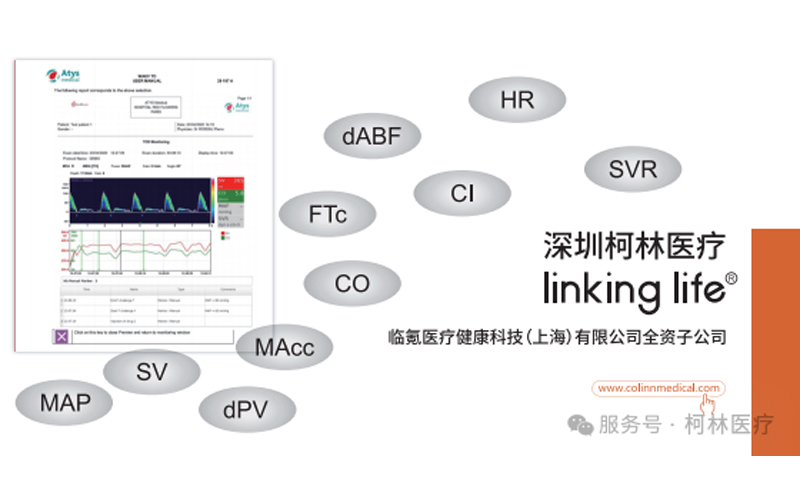
Only a 6 mm diameter probe needs to be orally inserted near the descending aorta in the esophagus. Based on the Doppler principle, it continuously and real-timely monitors core hemodynamic parameters including stroke volume (SV), cardiac output (CO), peak flow velocity variation (dPV) and systemic vascular resistance (SVR). It avoids arterial or deep venous puncture, and greatly reduces the risk of trauma and infection in patients.
2.Accurate and reliable measurement
It directly detects the blood flow velocity of the descending aorta to obtain parameters related to preload, afterload and myocardial contractility. Studies have shown that its monitoring results achieve a statistical correlation as high as 95% with invasive methods such as pulmonary artery catheterization. It provides a solid basis for clinical decision-making, and is especially suitable for fluid responsiveness assessment, shock classification and real-time feedback of therapeutic effects.
3.Simple operation and immediate response
The operation procedure is simple and efficient, enabling rapid monitoring preparation. Data can be acquired immediately after probe placement with parameters updated beat by beat. It timely reflects dynamic changes in the patient’s circulatory status, assisting medical staff in rapidly formulating and adjusting treatment strategies
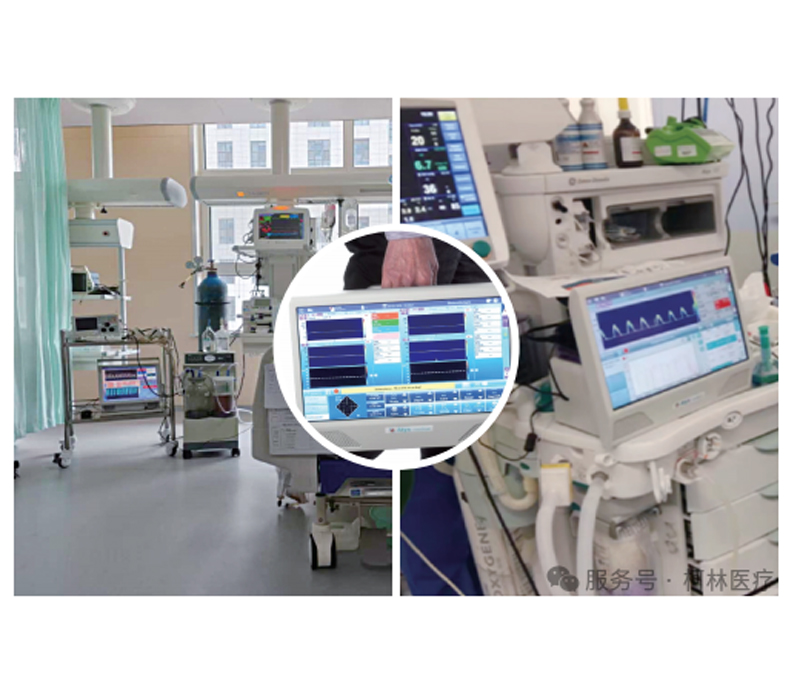
4. Remarkable Comparative Advantages
- Compared with other non-invasive techniques such as bioimpedance and pulse contour analysis, transesophageal Doppler monitoring directly measures blood flow in the thoracic aorta of the systemic circulation. It is less affected by peripheral vascular tone, arrhythmia and mechanical ventilation, delivering higher data stability and reliability in critically ill patients.
- Unlike completely non-invasive surface ultrasound, the system provides truly continuous monitoring data stream without repeated manual measurements. It minimizes interference from pulmonary air, reduces the workload of medical staff, and is more suitable for critically ill ICU patients requiring sustained monitoring.
- Achieving an optimal balance among non-invasiveness, continuity and accuracy, the technology effectively fills the technical gap between non-invasive intermittent monitoring and invasive continuous monitoring.
This academic conference not only served as a successful showcase of Colin Medical’s advanced monitoring technology, but also marked an important move to strengthen regional cooperation and support the development of critical care medicine in Shaanxi and the broader northwest region.
The company will continue to promote the popularization and application of this internationally advanced monitoring technology in more medical institutions, help critical care teams improve diagnosis and treatment capabilities, and ultimately benefit a large number of critically ill patients.